Building Soil at Dos Lobos Ranch: What 3 Years of Regenerative Farming Has Actually Done
posted on
March 24, 2026

Building Soil at Dos Lobos Ranch: What 3 Years of Regenerative Farming Has Actually Done
When people hear “regenerative agriculture,” they often imagine overnight transformation.
That’s not how it works.
So we want to show you what soil building actually looks like — year by year — on a real working farm in North Texas.
Three years ago, we started with soil that visually tested around 2–3% soil organic matter (SOM). That’s fairly typical for North Texas pasture that has seen years of conventional grazing (in the case of the property we purchased, 15+ years of constant hay baling).
Today, we are likely approaching 3% SOM farm-wide, with certain paddocks already ahead of that.
That may not sound dramatic, but in soil terms — that’s a meaningful shift.
Keep in mind -- we are such a tiny micro-ranch at only 10 acres, with only about 5-6 of it grazeable, the rest is recovering horse pasture with zero growth to start with (almost bare), plus buildings, our stock tank, etc. So management is extremely tight and becomes even more intentional.
Breed of livestock becomes even more important in our selection, not just for meat quality traits, but also for impact to the land. That's why we chose Irish Dexter cattle for their small size (about 1/2 the size of an Angus cow or less) and Kunekune hogs (smaller, slower growing, that don't tend to tear the ground up and will graze grass).
Why Soil Organic Matter, Matters
Soil organic matter is the engine of a pasture. It affects:
-
Water retention during drought
-
Nutrient cycling
-
Root depth
-
Forage recovery after grazing
-
Weed pressure
-
Hay dependence
As SOM rises, pasture becomes more stable and resilient. It's this stability that directly impacts the quality and consistency of the meat we raise.
What We’ve Done (Year by Year)
2023 – The Starting Line
-
5-8 cows
-
No structured rotational grazing and no NPK fertilization for the first time in years
-
Basic manure deposition
A full year of rest from 2022-2023 from the last hay baling event by the previous owner before we added cattle
Estimated SOM percent increase: +0.02 to +0.04
Small movement — which is exactly what you’d expect without intentional rest and recovery.
2024 – Introducing Rest & Living Roots
-
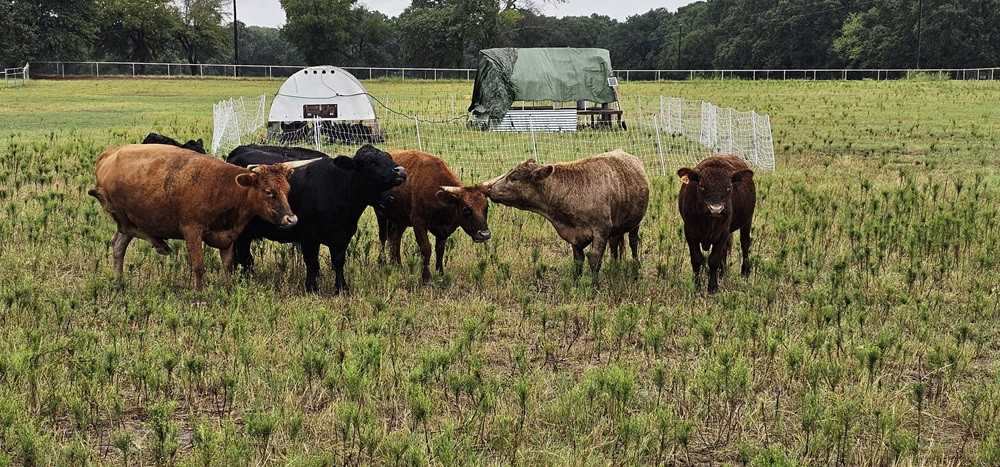
Began rotational grazing (about 1.5 full rotations before the grass died off in the summer, April-August, had to sell an extra cow at the end of the summer because there just wasn't enough grass to support them all)
-
Planted late winter/early spring cover crops
-
Started using organic worm compost tea in the fall
Estimated SOM increase: +0.06 to +0.13
This is when soil biology begins to accelerate. Rest periods allow grass roots to rebuild and store carbon underground instead of being grazed too early.
2025 – The Acceleration Year
This was the year the system began to show signs of maturity:
-
Increased to 18 cattle just to keep up with the insane amount of grass
-
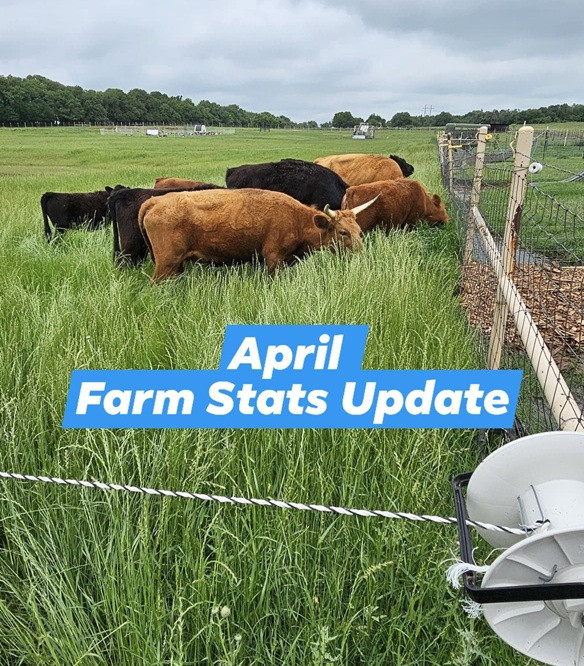
Completed 3 full grazing rotations, April-October
-
Introduced multi-species impact (pigs + poultry)
-
Heavy dung beetle activity (nature’s soil engineers), manure piles gone in 24-48 hours
-
Applied compost + biochar to part of the hay field
-
Bale grazed select areas
-
Continued compost tea through the growing season
Estimated SOM increase: +0.10 to +0.31
This is when visible changes started happening:
-
Darker soil
-
Thicker grass
-
Faster recovery
-
Fewer weed-dominated patches
Where We Stand Now
From a baseline around 2.5% SOM, our best estimate puts us around:
2.7–3.0% whole-farm average
With bale grazed and compost treated areas likely higher.
We will begin formal lab testing this year to measure our actual accumulation rate going forward.
Transparency matters — and so does data.
2026 Plan: Building Stability
This year’s focus is consolidation and deepening.
North 2-Acre Former Horse Pasture
-
Heavily bale grazed this winter
-
Plan to rest all year to allow carbon stabilization
Expected 2026 SOM gain: +0.10 to +0.35 (on that block)
South Hay Field (5–6 acres)
-
Continued rotational grazing
-
Spring + fall cover crops
-
Compost and chicken manure concentrated on weakest areas
-
Continued compost tea during growing season
Expected 2026 SOM gain: +0.10 to +0.26 (field average)
Why We Concentrate Inputs
Instead of spreading compost thinly across all acres, we focus it on weaker sections.
This creates “engine paddocks” — areas that recover faster, hold more moisture, and build deeper root systems.
Over time, those stronger paddocks help elevate the entire farm.
What Customers Should Know
Building soil is not marketing.
It’s measurable.
As organic matter rises:
-
We depend less on hay
-
Pasture handles drought better
-
Animals stay on grass longer
-
Soil holds more water after rain
-
Forage becomes more nutrient dense
That’s not just environmental stewardship — it directly affects meat quality.
What Other Farmers Might Find Useful
-
Bale grazing is one of the fastest ways to load carbon into soil — especially on compacted horse lots.
-
Dung beetle activity dramatically improves carbon retention. That means no deworming and no medicated feed for your animals. It can be done, and you can finish the grazing season with coccidia and worm-free animals thanks to the constant rotational grazing. We achieved that in 2025 with clean fecal samples at the end of the year.
-
Compost tea is not a mass carbon input, but it supports cycling, mass soil bacteria inoculation, and root growth.
-
Rotational rest is the non-negotiable foundation.
-
Weed succession tells the story of soil recovery.
We’ve seen ragweed → horseweed → croton → stronger sod formation.
That’s not random — that’s soil rebuilding.
Also -- customers are searching for regenerative farms in North Texas. They're having a hard time finding them. We blame the incredible difficulty of discovery on how search engines, social media, etc. are structured -- benefits the deepest pockets, not the genuine producers.
On our website, we have a current list of other farms in the area that are regenerative. Even if they're not regenerative, if they're a small family owned producer, they're on the list. Customers have expressed to us how grateful they are that this list exists because small farms are impossible to find due to shadow-banning and suppression from Big Tech. If you want on this list and you're in North Texas, please reach out!
The Goal
We’re not chasing perfection.
We’re chasing resilience.
Our next major threshold is consistently crossing 3% SOM farm-wide, where drought buffering and carrying capacity noticeably improve.
From there, everything compounds.
If you’d like to follow along as we begin soil testing this year, we’ll share those results too — good, bad, or otherwise.
Because regeneration isn’t a slogan.
It’s a process.


